

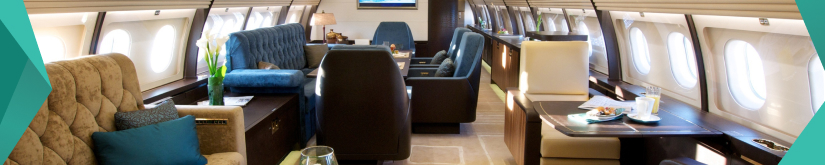
Private jet flights for bedridden patients
A leg in plaster up to the thigh, a fractured hip, a fresh spinal operation or an elderly parent who can no longer sit for hours: in each of these cases a scheduled flight becomes hard work or simply impossible. In a private jet the patient travels lying down or with the leg stretched out, relatives sit alongside, and a nurse or doctor joins the flight when the treating doctor asks for one. The aircraft leaves from a business aviation terminal and lands at the airport closest to the hospital, the rehabilitation centre or the patient's home.
European Private Jets is an air charter broker. For patients in a stable condition we choose an aircraft whose door and cabin suit the way the patient must travel, agree the stretcher or seating with the operator, and link the flight to the ground ambulances and the medical escort. Nurses, doctors and ambulances come from licensed medical partners, whom we name in the offer. Patients who need intensive care in the air fly in an air ambulance, described on the medical aviation page.
On an approved stretcher or on the divan.
Relatives sit next to the patient for the whole flight.
Escort from licensed medical partners.
Ambulance, flight and ambulance planned as one trip.

Who travels lying down in a private jet
Most of the patients whose flights we arrange are not in danger. They are stable, but they cannot sit upright for long, climb aircraft stairs or spend hours in a terminal. The most frequent cases:
- After an operation. A hip or knee replacement, spinal surgery or an abdominal operation, followed by the trip home or to a rehabilitation clinic once the surgeon allows the flight.
- Fractures and plaster. A leg in plaster, a fractured pelvis or femur, a stable vertebral fracture in a brace. The limb stays straight, and nothing that must stay still has to bend.
- Elderly and frail people. A move closer to the children, into a care home in another country or back from a long winter stay in the south, when queues, security checks and a narrow airline seat are too much.
- Long recovery. After a stroke or a long illness, between a rehabilitation centre and home, often with the carer who looks after the patient every day.
- An accident on holiday. A skiing fall in the Alps or a fracture on a beach holiday: after the first treatment in a local hospital, the patient flies home lying down.
- Wheelchair users. People with a spinal cord injury or a neurological disease who need help to board and space for their own equipment.
Not sure how your relative can travel? Leave your number and a manager will call you back:
Airline stretcher, road ambulance or private jet
There are three ways to move a person who cannot sit like other passengers. Each has its limits, and knowing them early saves days of phone calls.
| Stretcher on a scheduled flight | Road ambulance | Private jet | |
|---|---|---|---|
| Lying down | On a stretcher fitted over six to nine seats, behind a curtain; offered only by some airlines and on some aircraft | Yes, for the whole trip | On an approved stretcher, or on the divan during the cruise |
| Advance notice | Several days; the airline's medical service reviews a medical form (MEDIF) and may refuse the booking | As agreed with the ambulance service | Usually one to three days with a stretcher; the same day for a patient who can sit, if an aircraft is near |
| Route | Only where direct flights exist; a connection means unloading and loading the stretcher again | Any, but long hours in a moving vehicle | Direct to the airport nearest to the hospital or home |
| At the airport | Through the passenger terminal; boarding by a lift vehicle before the other passengers | No airport | Business aviation terminal; where the airport allows it, the ambulance drives up to the aircraft |
| Companions | An escort is compulsory; other relatives in free seats elsewhere in the cabin | Usually one relative | Relatives, nurse or doctor in the same cabin |
| Privacy | Shared cabin | Full | Full: only the patient and the people with them are on board |
| Cost | All seats taken by the stretcher, the escort's ticket and return, ambulances at both ends | Grows with distance and staff on board; lowest on short trips | The whole aircraft, the same for one passenger or eight, plus stretcher, escort and ambulances |
Each airline applies its own rules, so the column for scheduled flights shows the usual practice of European carriers. When the drive takes less than two or three hours, a road ambulance is normally the simpler and cheaper choice.
How the patient travels in the cabin
The treating doctor says how the patient must travel; the aircraft follows from that, not the other way round.
In a business jet there are three options.
In a club layout the seats face each other, so the leg in plaster rests on the opposite seat with pillows under it, or the patient sits sideways on the divan. This works for fractures of the foot, ankle, knee or lower leg and fits almost every jet, light jets included.
Most midsize and larger jets have a divan for two or three people, and in many of them two facing seats recline into a flat bed. The patient lies down during the cruise. European operating rules require every passenger to occupy a seat or berth with the belt fastened for take-off and landing, so on most divans the patient has to sit up for those few minutes.
A stretcher kit is approved for a specific aircraft type and installed by the operator before the flight. It locks into the seat rails, usually in place of two to four seats, has its own belts and mattress, and its backrest can be raised as the doctor prescribes. A patient who cannot sit even for take-off and landing travels this way.
Door, steps and loading
Business jet doors are much smaller than airliner doors. On many light and midsize jets the entrance is about 60 cm wide, behind a few steep steps, and a stretcher has to be tilted to pass through it. A patient who cannot climb is carried on board by the ambulance crew in a carry chair or on the stretcher itself.
The stretcher has to be tilted to pass through.
The stretcher goes in level, without tilting.
The Pilatus PC-12 and Pilatus PC-24 solve the problem with a rear cargo door and a flat cabin floor. Heavy jets such as the Challenger 604, 605 and 650 have a wider main door and more room inside to turn the stretcher.
Which aircraft take a stretcher
How a patient usually travels in each class and how many seats remain for relatives and the escort. The exact figure depends on the layout of the particular aircraft, so we confirm it before the offer.
Citation M2, Phenom 100. Seated, with the leg on the opposite seat; as a rule no stretcher.
Pilatus PC-12. Stretcher through the cargo door, or seated with the leg up.
Pilatus PC-24, Learjet 45. Stretcher (in the PC-24 through the cargo door) or seated.
Citation Latitude, Learjet 75. Lying on the divan or on two seats made into a bed; stretcher with some operators.
Challenger 350. Three-seat divan and flat floor; stretcher with some operators.
Challenger 650, 604 and 605, Legacy 650. Stretcher or bed in one part of the cabin, family in another.
A leg in plaster usually needs no more than a light jet. A patient who must lie on the divan needs a midsize jet or larger. With a stretcher, a nurse and several relatives, the choice is between the PC-12 or PC-24 with their cargo doors and a heavy jet with a cabin in separate zones. The Legacy 650 has three zones: the patient rests on the divan at the back while the family sits further forward, and the baggage compartment, which can be reached in flight, takes a folded wheelchair.
Who flies with the patient
Who comes on board is decided by the family and the treating doctor; we check that the aircraft has the seats. Operators normally require a nurse or doctor next to a patient on a stretcher. A patient who sits with a leg in plaster usually needs only a relative.
Checks vital signs, gives the prescribed medicines, helps with changes of position and with the toilet. This is the escort most often booked for stable patients lying down.
from EUR 600 per dayBooked when treatment may have to be adjusted during the trip or when the treating doctor considers it wise. A doctor and nurse team costs from EUR 1,300 per day.
from EUR 900 per dayThey know the patient's routine and can fly as companions; for medical care in flight they agree the responsibilities with the medical provider beforehand.
They sit next to the patient throughout. A patient escorted by a nurse can also fly without family, and the nurse hands them over to the receiving ward or to the person waiting at home.
The escort reads the medical report and talks to the ward before the flight, takes over the patient at the bedside and stays with them in both ambulances and in the air. If the escort returns by scheduled flight, that ticket is added to the fee and shown in the offer.
Wheelchair, oxygen, medicines and the toilet
- Wheelchair and walking aids. Crutches, a walking frame and a folding wheelchair travel in the cabin or the baggage compartment. For an electric wheelchair the operator needs its dimensions, weight and battery type in advance.
- Oxygen. The operator can supply medical oxygen cylinders, or the patient brings a portable concentrator of a model approved for use in flight. Tell us the prescribed flow in litres per minute; the operator has to approve it.
- Medicines. They stay in the cabin in the original packs, with enough for the whole trip and a few extra days. Strong painkillers and other controlled drugs need a Schengen certificate, one per medicine, for travel within the Schengen area, and a doctor's letter or a permit elsewhere.
- Toilet. In turboprops and small jets the toilet is tight or separated only by a curtain. For a patient who needs help we look for a larger cabin with a closed toilet; for a patient who cannot get up, the nurse brings what is needed.
- Catering. Meals are prepared to the doctor's instructions: soft food, a diabetic menu or a light diet.
Cabin pressure and fitness to fly
A business jet cabin is pressurised much like an airliner's, so the same medical advice applies. Gas trapped in the body expands at altitude, and a limb in plaster may swell.
Airlines usually ask passengers to:
- wait 24 hours after a cast is applied for flights up to two hours;
- wait 48 hours for longer flights;
- or have the cast split along its length.
Doctors often use the same rule for a private flight.
- There is no fixed waiting time after a fracture or a joint replacement: the surgeon weighs the risk of thrombosis and may prescribe compression stockings or injections, especially on flights longer than a few hours.
- After some operations on the chest, eye or brain, the doctor may ask for a flight with a sea-level cabin, which is explained on the medical aviation page.
The decision to fly is always the treating doctor's, and the operator may ask for a written fit-to-fly note.
Bed to bed, step by step
The flight is the middle part of the trip. We plan the two journeys on the ground with it, so the patient moves from one bed to the other without waiting rooms.
- CollectionThe ambulance arrives at the ward or at home at the agreed time. The escort takes the handover from the nurses and gets the patient ready for the journey.
- To the airportThe drive is timed so that the patient arrives shortly before departure and does not wait in the terminal.
- At the aircraftDocuments and baggage are checked at the business aviation terminal. Where the airport allows it, the ambulance drives onto the apron with an escort from the handling agent and stops at the aircraft.
- BoardingThe patient goes on board on the stretcher, in a carry chair or with help on the steps; the family follows.
- In flightThe crew sets the cabin temperature and light to suit the patient, and your manager keeps the ambulance at the destination informed of the landing time.
- ArrivalThe second ambulance waits at the aircraft or at the terminal. On flights from outside the Schengen area, passport and customs checks are done at the aircraft wherever the airport allows it.
- HandoverThe patient is handed to the receiving ward or brought home and settled in bed, with the medical file and notes on the journey.

Prices for flights with a bedridden patient
The price is for the whole aircraft, one way, and includes crew and fuel; handling, airport fees and passenger taxes are added in the quote. It does not change with the number of people on board, so relatives and the escort add nothing to the aircraft price, only their passenger taxes. The figures apply when a suitable aircraft is based near the departure airport.
Aircraft with a cargo door for the stretcher
| Routeflight time by PC-24 | TurbopropPilatus PC-12 | Light jetPilatus PC-24 |
|---|---|---|
| Sion - Brussels1:17 h | EUR 8,000 | EUR 11,000 |
| Salzburg - Amsterdam1:34 h | EUR 9,000 | EUR 12,000 |
| Geneva - Hamburg1:42 h | EUR 9,500 | EUR 12,500 |
| Madeira - Lisbon1:50 h | EUR 9,500 | EUR 13,000 |
| Innsbruck - London Farnborough1:52 h | EUR 10,000 | EUR 13,000 |
| Split - Warsaw1:55 h | EUR 10,000 | EUR 13,500 |
| Olbia - Paris Le Bourget1:58 h | EUR 10,000 | EUR 13,500 |
| Palma - Düsseldorf2:22 h | EUR 11,500 | EUR 15,000 |
| Corfu - Frankfurt2:32 h | EUR 12,000 | EUR 15,500 |
| Alicante - Manchester2:50 h | EUR 12,500 | EUR 16,500 |
| Gran Canaria - Madrid2:57 h | EUR 13,000 | EUR 17,000 |
| Faro - Dublin3:02 h | EUR 13,500 | EUR 17,500 |
| Nice - Stockholm Arlanda3:10 h | EUR 13,500 | EUR 18,000 |
The PC-12 is the least expensive way to carry a stretcher, but as a turboprop it is slower: Nice to Stockholm takes about 4:25 h, against 3:10 h in the PC-24. For a patient lying down, an extra hour or more in the air is worth discussing with the doctor.
Larger cabins with a divan or a separate zone
| Routeflight time by PC-24 | Midsize jetCitation Latitude | Heavy jetChallenger 650 |
|---|---|---|
| Sion - Brussels1:17 h | EUR 13,000 | EUR 21,000 |
| Salzburg - Amsterdam1:34 h | EUR 14,000 | EUR 23,000 |
| Geneva - Hamburg1:42 h | EUR 14,500 | EUR 24,000 |
| Madeira - Lisbon1:50 h | EUR 15,500 | EUR 25,000 |
| Innsbruck - London Farnborough1:52 h | EUR 15,500 | EUR 25,000 |
| Split - Warsaw1:55 h | EUR 15,500 | EUR 25,000 |
| Olbia - Paris Le Bourget1:58 h | EUR 16,000 | EUR 26,000 |
| Palma - Düsseldorf2:22 h | EUR 17,500 | EUR 29,000 |
| Corfu - Frankfurt2:32 h | EUR 18,500 | EUR 30,000 |
| Alicante - Manchester2:50 h | EUR 20,000 | EUR 32,000 |
| Gran Canaria - Madrid2:57 h | EUR 20,000 | EUR 33,000 |
| Faro - Dublin3:02 h | EUR 21,000 | EUR 34,000 |
| Nice - Stockholm Arlanda3:10 h | EUR 21,000 | EUR 34,000 |
Longer flights home
From Tenerife the PC-24 has to stop for fuel, so the non-stop Citation Latitude is both faster and slightly cheaper. On long legs we compare classes by the total time the patient spends on board as well as by price. Prices for other routes and classes are on the prices page.
What is added to the flight price
- Stretcher kit and oxygen: quoted by the operator and shown as a separate line in the offer.
- Medical escort: nurse from EUR 600 per day, doctor from EUR 900 per day, doctor and nurse team from EUR 1,300 per day, plus the escort's return journey if they do not fly back with the aircraft.
- Ground ambulances: priced by distance, staff on board and access to the apron.
- Passenger taxes: France charges a tax per passenger on departures that grows with distance, from EUR 210 in a turboprop and EUR 420 in a jet; Italy charges EUR 100 per passenger up to 1,500 km and EUR 200 beyond. Other countries' taxes are listed in the quote.

Planning the flight: what we need and how long it takes
The more we know at the first call, the faster and more accurate the offer. The operator and the medical escort will ask for:
- How the patient must travel: seated with the leg up, lying on the divan or on a stretcher, and whether the backrest may be raised.
- Weight and height of the patient, and any equipment that comes along, such as oxygen, a pump or an electric wheelchair.
- Who flies: the number of relatives and whether a nurse or doctor is needed.
- Addresses: the ward or home at each end, with a contact person, and the planned time of discharge.
- Documents: a recent medical report and the treating doctor's opinion on the flight, the receiving clinic's confirmation of the admission time and copies of everyone's passport or ID card.
Usual time to departure
Contract, payment and cancellation
The flight contract names the operator, the aircraft, the times, how the patient travels and what the price includes; the medical escort and the ambulances have their own contracts with their providers. Payment is by bank transfer or card before the flight, cryptocurrency (mainly USDT and USDC) is accepted, and other arrangements, including cash, can be discussed individually and depend on the situation. Details are on the payment page.
If the doctors postpone the discharge, tell us at once: we first try to move the flight with the operator. Penalties and refunds follow the contracts and our terms and conditions.
To receive offers, fill in the form and write in the notes how the patient must travel: seated, on the divan or on a stretcher. For an urgent transfer the phone is faster: +357 96407410, or WhatsApp +49 157 33565927; e-mail private@jets.flights.
Questions about flights with bedridden patients
-
- Can a patient lie flat for the whole flight, including take-off and landing?
-
Yes, on a stretcher approved for that aircraft type. On a divan the patient lies down during the cruise but usually has to sit up with the belt fastened for take-off and landing.
-
- Can a stretcher be fitted in any business jet?
-
No. The stretcher kit must be approved for the aircraft type, and only operators equipped for such flights install it. It is used mainly in the Pilatus PC-12 and PC-24, which load it through a cargo door, and in larger jets such as the Learjet series and the Challenger 604, 605 and 650.
-
- Can I fly with my leg in plaster without a stretcher?
-
Usually yes. In a jet with facing seats the leg rests on the opposite seat or along the divan, supported by pillows. If the cast was applied less than a day or two before the flight, ask your doctor whether it should be split first.
-
- Is a nurse compulsory on a stretcher flight?
-
Operators normally require a nurse or doctor next to a patient on a stretcher. A patient who travels seated with a fracture usually flies with a relative only, unless the treating doctor advises otherwise.
-
- Is a stretcher on a scheduled flight cheaper?
-
Often yes on routes with direct flights, because you pay for the six to nine seats the stretcher covers plus the escort's ticket. It needs several days' notice and the airline's medical approval, the cabin is shared, and a connection means unloading and loading the stretcher again.
-
- Do you carry patients with a high body weight?
-
Yes, with a suitable stretcher and aircraft. Tell us the weight and height at the first call, because they decide the stretcher's load limit, the door width and the number of people needed to carry the patient on board.
-
- Can an electric wheelchair come on the flight?
-
In most cases yes, in the baggage compartment. The operator needs its dimensions, weight and the type of battery in advance, because some batteries have to be disconnected or carried under special rules.
-
- Can the patient use oxygen during the flight?
-
Yes, with the operator's approval. Oxygen comes in cylinders supplied by the operator, or the patient uses a portable concentrator of an approved model. We need the prescribed flow in litres per minute.
-
- Can the patient be collected at home rather than from a hospital?
-
Yes. The ambulance or a vehicle suited to wheelchairs picks the patient up at home, and the escort can meet them there. This is common when an elderly person moves to live near the family or into a care home.
-
- Which aircraft suits a long flight with the whole family?
-
A heavy jet such as the Challenger 650 or Legacy 650. The patient lies in one part of the cabin on a stretcher or the divan, while six to eight seats remain for relatives and the escort, and the aircraft flies non-stop on most European routes.
-
- How much does a flight with a bedridden patient cost?
-
A Pilatus PC-24, which takes a stretcher through its cargo door, costs EUR 13,000 from Innsbruck to London Farnborough and EUR 15,000 from Palma to Düsseldorf, for the whole aircraft one way. The stretcher kit, the escort from EUR 600 per day for a nurse, and the ambulances are added.
The aviation expert will answer all your questions about business aviation and private flights. We will help you to compare and choose the best business jet for your flight.