
Private cargo aircraft rental
A gearbox for a grounded aircraft, a painting due at an auction house, prototypes for a trade fair, a pallet of medical supplies: some shipments cannot wait for the next scheduled flight or a lorry. For these, European Private Jets arranges a whole aircraft for your cargo, leaving at the hour you set and flying straight to the airport nearest the recipient.
We are a broker with offices in Nice, Hamburg, Geneva and Larnaca. We have no aircraft of our own: every cargo flight is operated by a licensed air operator, and through these operators we can choose from about 6,500 aircraft. For a small and urgent load this is usually a turboprop or a business jet; for pallets and heavy equipment, a dedicated freighter. When a suitable aircraft and crew are near the departure airport, the flight can leave about 4 hours after the request is confirmed.
-
- About 4 hours
- from confirmation to take-off
-
- From one parcel
- to a full freighter load
-
- About 6,500
- aircraft via licensed operators
-
- Operator named
- in every contract
-
- Documents
- contract, air waybill, customs papers
-
- 24/7
- requests accepted and processed
What can be carried
Almost any lawful shipment can fly on a chartered aircraft, provided it fits through the door, stays within the floor and weight limits and comes with the right papers. These are the loads we are asked to move most often:
An engine part for an aircraft on ground (AOG), a pump for a stopped production line, a component for a ship or a drilling rig. A day of downtime often costs more than the flight.
Paintings and sculptures in climate crates, jewellery and watch collections for auctions and fairs, antiques, precious metals. A courier or the owner's representative can sit next to the crate.
Original contracts, tender bids, notarial deeds and server drives that must reach the other side the same day and must not pass through a sorting centre.
Medicines, vaccines, laboratory samples and equipment with a narrow temperature window. Dry ice used for cooling counts as a dangerous good and must be declared.
Pre-series car parts, design models, collections for fashion shows and stands for exhibitions. Batteries inside prototypes are usually lithium batteries and need to be listed.
Machinery for mining, oil and gas, generators, vehicles and humanitarian aid on pallets. These go on freighters, from a regional turboprop to the largest heavy-lift aircraft.
Three ways to fly a shipment
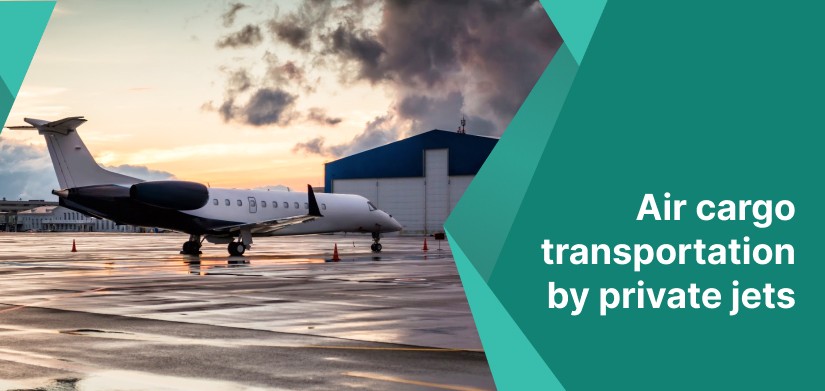
The same crate can travel in three different ways. The choice changes the aircraft you can use, the documents and who is responsible for the load during the flight.
| Business jet with a courier | Cargo flight on a small aircraft | Dedicated freighter | |
|---|---|---|---|
| How the load travels | In the cabin or baggage hold, as the baggage of the person on board | As cargo, in the cabin with seats removed or in the hold | On the main deck and in the lower hold, on pallets or in containers |
| Who is on board | The owner, an employee or a professional on-board courier | Crew only | Crew only; a supercargo or groom on some flights |
| Typical load | A few crates up to a few hundred kilograms | Up to about 1-1.5 t, by type | From a few tonnes to 150 t |
| Transport document | Passenger list and list of pieces | Air waybill | Air waybill |
| Best for | Art, jewellery, documents, anything that must stay in sight | Spare parts, samples, medical supplies | Pallets, machinery, vehicles, aid |
Which aircraft for which load
For a cargo flight the seat count matters less than three other figures: the size of the door, the volume of the cabin or hold and the weight the aircraft can lift on your route. The longer the leg, the more fuel is needed and the less cargo fits within the maximum take-off weight.
Typical types for cargo charters, from the smallest to the largest:
| Aircraft | Payload | Door or hold |
|---|---|---|
| Pilatus PC-12Single-engine turboprop | Up to about 1 t on short legs | Rear cargo door about 1.35 x 1.32 m, flat cabin floor |
| Pilatus PC-24Light jet | Several hundred kilograms | Rear cargo door about 1.25 x 1.30 m, pressurised rear hold of about 2.5 m³ |
| Cessna 208B Grand CaravanTurboprop freighter | About 1.4 t | Wide cargo door, optional under-fuselage cargo pod |
| ATR 72-600FRegional turboprop freighter | Up to 9.2 t | Door 2.95 x 1.80 m, 75 m³, five pallets |
| Boeing 737-800BCFNarrow-body jet freighter | Up to about 23.9 t | Main deck about 141 m³ plus lower hold |
| Airbus A330F, Boeing 777F, Boeing 747FWide-body jet freighters | From about 60 t to more than 130 t, by type | Large side door for full-height pallets |
| Antonov An-124Heavy-lift freighter | 120 to 150 t, by version | Hold about 36.5 x 6.4 x 4.4 m, nose and rear ramps |
The figures are manufacturer data. The real payload depends on the layout of the individual aircraft and the fuel the route needs, so every load is checked with the operator before the quote is sent.
On most business jets the passenger door is 60-80 cm wide, so a flat crate can pass but a cube of one metre cannot. The PC-12 and PC-24 were designed with a large rear cargo door, which is why they are the usual choice for bulky but light items. Send us the three dimensions and the weight of each piece, and we check them against the door drawing and the floor limits.
On many light and midsize jets the main baggage hold sits outside the cabin and cannot be reached in flight. Items sensitive to cold or pressure changes travel in the cabin or in a pressurised hold.
A turboprop can land on a short strip near a factory or a port; a 737 freighter needs a larger airport with a main-deck loader. The An-124 carries its own cranes and loads through its ramps, which helps with very heavy pieces at airports without special equipment.
More turboprops with their cabin sizes are in the turboprop catalogue.

Rent, charter or lease: which contract you need
Renting and leasing a cargo plane are often treated as the same thing, but in aviation they are different contracts.
- Ad hoc charter. One aircraft with crew for one flight or a short series of flights. You pay a fixed price for the whole mission and the operator handles fuel, crew, airport charges and handling. This is what most shippers need.
- Series charter. The same route flown regularly, for example once a week for a season or during a construction project. The price per flight is agreed in advance and is usually lower than for a single booking.
- ACMI, or wet lease. The lessor provides the Aircraft, Crew, Maintenance and Insurance and is paid per block hour, normally with a minimum number of hours per month. The lessee pays fuel, airport and navigation charges and handling and must have the commercial set-up to fill the aircraft. ACMI suits airlines and freight forwarders that run their own network for weeks or months, not a company with a single shipment.
- Dry lease. The aircraft alone, without crew, placed on the lessee's own air operator certificate. It is a long-term deal between an airline and a leasing company and is not a way to move a shipment.
If you are not sure which format fits, describe the cargo and how often it has to fly. In most cases the answer is an ad hoc or series charter, with one contract and one price for each flight.
Cargo aircraft rental price
A cargo charter is priced for the whole aircraft, not per kilogram, and the value of the load does not change the price of the flight. The figure depends on:
- the aircraft type, chosen by weight, dimensions and distance;
- positioning: if the nearest suitable aircraft is based elsewhere, its flight to the loading airport is part of the price;
- the return: after a one-way delivery the aircraft usually flies back empty, and that leg is built into the quote;
- waiting time if the aircraft has to wait for a return load or for the courier;
- handling, landing and parking fees, and the cost of customs outside opening hours;
- loading equipment, dangerous goods handling and any special packaging.
The table shows one-way prices for the whole aircraft on routes typical for urgent industrial, art and pharmaceutical shipments, with flight times for each aircraft. They assume an aircraft based near the departure airport; handling and airport fees are added in the quote.
| Route | TurbopropPilatus PC-12 | Light jetPilatus PC-24 | Super midsizeChallenger 350 |
|---|---|---|---|
| Paris Le Bourget - Stuttgart | EUR 8,0001:31 h | EUR 11,0001:11 h | EUR 14,0001:07 h |
| Frankfurt - Milan Linate | EUR 8,0001:33 h | EUR 11,0001:13 h | EUR 14,0001:08 h |
| Geneva - Antwerp | EUR 8,0001:39 h | EUR 11,0001:17 h | EUR 14,5001:12 h |
| Munich - Paris Le Bourget | EUR 8,5001:54 h | EUR 12,0001:27 h | EUR 15,5001:22 h |
| Vienna - Hamburg | EUR 9,0002:04 h | EUR 12,0001:34 h | EUR 16,0001:28 h |
| Zurich - London Farnborough | EUR 9,0002:08 h | EUR 12,5001:36 h | EUR 16,5001:30 h |
| Frankfurt - Aberdeen | EUR 10,0002:40 h | EUR 13,5001:59 h | EUR 18,5001:50 h |
| Hamburg - Toulouse | EUR 11,0003:06 h | EUR 14,5002:16 h | EUR 20,0002:06 h |
| Amsterdam - Madrid | EUR 12,0003:29 h | EUR 15,5002:32 h | EUR 22,0002:19 h |
| Frankfurt - Istanbul | EUR 13,5004:15 h | EUR 17,5003:03 h | EUR 25,0002:48 h |
The PC-12 is the cheapest of the three on every route in the table and has the largest door. The PC-24 saves from 20 minutes to more than an hour on the same legs, and the Challenger 350 makes sense for longer distances or when a courier and several crates travel together.
Freighters such as the ATR 72, the 737 or wide-body types are priced for each request, because availability, positioning and loading equipment vary far more than for business jets. For a quote we need the route, the date, the number of pieces with dimensions and weights, and a description of the goods.
Customs and documents
Between two EU countries, goods in free circulation move without a customs declaration. A flight to or from the UK, Switzerland, Norway or any other non-EU country needs export and import formalities, which a customs agent at each end prepares. The papers a cargo flight may need:
- Air waybill for a cargo flight, or a passenger list and list of pieces when a courier travels with the load.
- Commercial or pro forma invoice and packing list with the value, weight and dimensions of each piece.
- Export declaration for goods leaving the EU, and the import declaration at destination.
- ATA carnet for samples, exhibition goods and professional equipment that go abroad temporarily and come back. It is valid for up to one year.
- Export licence for cultural goods when art or antiques leave the EU. Many countries also require a national permit for older works of art, even inside the EU.
- Cash and gold declaration for EUR 10,000 or more in cash, bearer instruments, gold coins or investment bullion moved into or out of the EU. Some countries also require it for movements within the EU.
- Special certificates where the goods need them: CITES for protected species (ivory, exotic leathers, some instrument woods), Kimberley Process certificates for rough diamonds, excise documents for commercial shipments of wine and spirits.
Flights to and from non-EU countries must use airports with customs. At smaller airfields customs officers attend on request, and outside opening hours there may be a charge; we check this when choosing the airports. We only arrange transport of declared goods with a known shipper and recipient.
Dangerous goods
Dangerous goods can fly on a charter, but only under the ICAO Technical Instructions and the IATA Dangerous Goods Regulations, and only with an operator approved by its aviation authority to carry them. The shipper classifies, packs and labels the goods and signs a Shipper's Declaration for Dangerous Goods; some substances may not be carried by air at all.
Declared at the start, they rarely cause a problem; discovered at loading, they can stop the flight.
Packing, security and insurance
Rigid crates with padding for art and equipment, shock and tilt indicators for fragile items, temperature loggers for medicines and sensitive works. Every piece is strapped down in the aircraft.
A security company can accompany the load by road to and from the airport. As a rule, weapons may not be carried in the cabin, so in the air the load travels with an unarmed courier or with the crew only.
At some airports an approved vehicle may drive onto the apron next to the aircraft; at others the handover takes place at the business aviation terminal. We clarify this with the airport in advance.
Contents and value are shared only with those who need them: the operator, customs and the insurer. Packing carries no hint of what is inside.
How a cargo flight is organised
- RequestRoute or pick-up and delivery addresses, the date and the time by which the load must arrive, number of pieces with dimensions and weights, a description of the goods, any dangerous goods, temperature needs and whether someone will travel with the load.
- Feasibility checkWith the operator we check that every piece passes through the door and can be secured, that the payload works on the route and that both airports have customs and opening hours to match.
- QuoteUsually two or three options with the aircraft, the operator, times, price and a list of the documents needed.
- Contract and documentsYou sign the charter contract, in which the operator is named, and send copies of the customs papers and, if a courier flies, their passport details.
- Delivery to the airportThe load reaches the business aviation terminal or cargo terminal with your forwarder or escort; it is checked, sealed if required, loaded and secured.
- Flight and handoverYour manager follows the flight until landing. At destination the load clears customs where needed and is handed over against signature.
Payment is by bank transfer or card, normally before departure; cryptocurrency is also possible, and other arrangements, including cash, can be discussed individually and depend on the situation. Details are on the payment page, and cancellation rules follow the contract and our terms and conditions.
For the last few kilometres, for example to an offshore platform or a yacht, a load of modest weight can continue by helicopter. How we compare operators and check their certificates is explained on the air broker page.
To request a cargo flight, use the form and note the dimensions and weight of each piece in the comments:
Questions about cargo aircraft rental
-
- How much does it cost to rent a cargo plane?
-
For a small urgent load in Europe, a Pilatus PC-12 costs from EUR 8,000 one way, for example from Frankfurt to Milan Linate, and a PC-24 from EUR 11,000 on the same route. Freighters are priced for each request. The price is for the whole aircraft and does not depend on the value of the cargo.
-
- Is a cargo charter only for large and heavy freight?
-
No. Many cargo charters carry only a few crates or a single envelope. When speed or value matters more than volume, a turboprop or a light jet is faster to arrange and cheaper than a freighter.
-
- How quickly can a cargo aircraft leave?
-
About 4 hours after the request is confirmed, if a suitable aircraft and crew are near the departure airport. Customs papers, dangerous goods approval and freighter loading equipment can add time, so send these details with the first request.
-
- Can someone travel with the shipment?
-
Yes. The owner, an employee or a professional on-board courier can sit next to the load and hand it over in person. The flight is then a passenger flight, and any business jet can be used.
-
- Will my crate fit into a business jet?
-
It depends on the door more than on the cabin. Most jet doors are 60-80 cm wide; the Pilatus PC-12 and PC-24 have rear cargo doors of about 1.3 m. Send us the three dimensions and the weight of each piece and we check them with the operator.
-
- What is the difference between renting and leasing a cargo plane?
-
Renting usually means a charter: an aircraft with crew for one or several flights at a fixed price. Leasing means a longer contract, such as an ACMI wet lease paid per block hour, which suits airlines and forwarders with their own network rather than a single shipment.
-
- Can you fly dangerous goods?
-
Yes, with an operator approved for dangerous goods and a signed Shipper's Declaration. Lithium batteries, dry ice, perfumes and aerosols are among them, so list them in the request.
-
- Who takes care of customs?
-
A customs agent at each end prepares the export and import declarations; you or your forwarder can appoint one, or we coordinate with the agent at the airport. Within the EU no customs declaration is needed for goods in free circulation.
-
- Is the cargo insured during the flight?
-
The carrier's liability is limited by the Montreal Convention to 26 special drawing rights per kilogram, far below the value of most urgent or valuable loads. We recommend separate cargo insurance, which the owner or the forwarder takes out before the flight.
-
- Can we book regular cargo flights on the same route?
-
Yes, as a series charter with the same aircraft type and a price agreed per flight in advance. This works well for a construction project, a production ramp-up or a season of shipments.
-
- Can a cargo plane land at a small airfield?
-
A turboprop such as the PC-12 or the Grand Caravan uses short runways near factories, ports and remote sites. Freighters from the ATR 72 upwards need longer runways and loading equipment, so the airport is chosen together with the aircraft.
The aviation expert will answer all your questions about business aviation and private flights. We will help you to compare and choose the best business jet for your flight.