
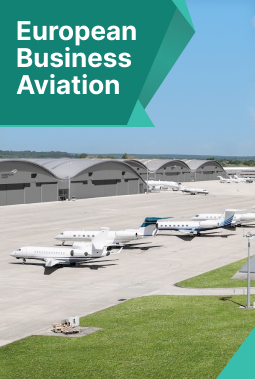
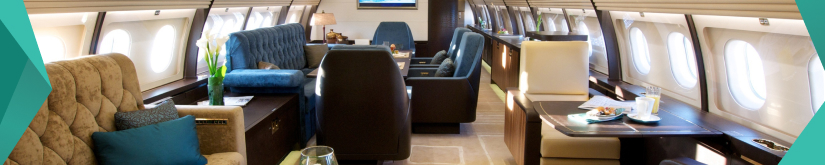
Business aviation services in Europe
Business aviation is the part of civil aviation in which aircraft fly on demand, not to an airline timetable. A business jet, turboprop or helicopter with its own crew carries one group of passengers at the time they choose, between the airports closest to where the journey starts and where it ends. The sector includes company flight departments and owners who fly their own aircraft, but most travellers meet it through on-demand charter by licensed air operators.
European Private Jets works in this charter segment as a broker. We have no aircraft of our own: for each trip we compare offers from operators holding an Air Operator Certificate, with access to about 6,500 aircraft, and we arrange what happens around the flight, from the business aviation terminal to the car at the other end.
Our offices are in Nice, Geneva, Hamburg and Cyprus, and requests are accepted 24/7. If you already know what you need, the pages on private jet charter and business jet rental explain how to book a single trip or keep an aircraft for several days.
-
- About 4 hours
- from a confirmed request to take-off
-
- About 1,500
- European airports used by business aircraft
-
- Around 6,500
- aircraft via licensed operators
-
- 34
- partner companies
-
- 20-30 minutes
- at the terminal before departure
-
- 24/7
- requests accepted and processed

What business aviation covers
The term describes the use of aircraft by companies and individuals for their own travel, outside scheduled airline services. The industry distinguishes three kinds of flying:
An operator with an AOC flies its aircraft for hire: whole-aircraft charter, short air taxi hops, Empty Legs and seats on shared flights. This is the form most clients use and the one we arrange.
A company owns or leases aircraft and employs pilots to fly its own staff and guests. Such flights are non-commercial and may not be sold to outsiders.
An individual, often a business owner, flies their own aircraft, usually a turboprop or a light jet, for their own trips.
Several words are used loosely around the sector. Private aviation usually means the same as business aviation. General aviation is a different term: in the strict sense it covers all civil flying except scheduled services and air transport for hire, from flying clubs to company jets, yet at airports the general aviation terminal (GAT) handles every flight that is not an airline service, charters included. A business jet is the typical aircraft of the sector, with 4 to 19 passenger seats.
Most of that time is gained on the ground: no connection at a hub, a short check-in and a landing closer to the final address.
Business aviation and airline travel compared
A business class ticket improves the seat. Business aviation changes the whole journey, from the departure time to the terminal and the people in the cabin.
| Scheduled airline | Business aviation | |
|---|---|---|
| Timetable | Set by the airline months ahead | Set by the client and usually movable if plans change |
| Airports | Only airports with scheduled services | About 1,500 in Europe, including regional airfields and Alpine airports such as Samedan and Sion |
| Terminal | Main passenger terminal with shared queues | Business aviation terminal or FBO with its own entrance, security and border control |
| Arrival at the airport | Check-in closes 30-60 minutes before departure, and airlines advise coming much earlier | 20-30 minutes before departure is usually enough |
| Route | Direct where a service exists, otherwise via a hub | Direct to the airport nearest the destination |
| Cabin | Shared with other passengers | Your group only: calls, documents and meetings stay private |
| Luggage | Fixed allowance per ticket | Limited by the hold and the aircraft's weight, not by a fare |
| Pets | Small animals in the cabin on some airlines, larger ones in the hold | In the cabin with the owners once the operator has approved them |
| Several cities in a day | Rarely possible | The aircraft waits at each stop and flies on |
| Price | Per seat | For the whole aircraft, shared by the group |
For one or two travellers on a route with frequent airline services, a scheduled flight costs far less. Business aviation pays off when:
- a group travels together, so the price is shared: six people in a Citation CJ3 from Paris Le Bourget to Geneva pay about EUR 1,400 each before taxes;
- the day includes several cities;
- the destination has no direct flights;
- luggage, pets or confidentiality rule out an airline.
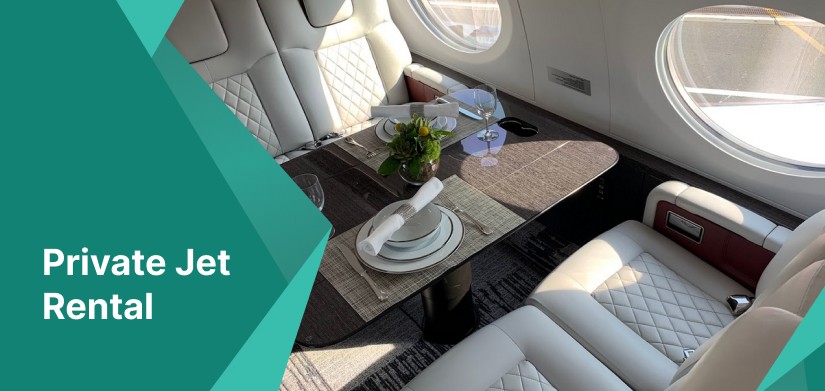
Business aviation terminals and FBOs
Private flights rarely pass through the main passenger terminal. Larger airports have a separate general aviation terminal or several FBOs.
An FBO, or fixed base operator, is the company that runs such a terminal and looks after both passengers and aircraft: it receives the passengers and crew, loads the luggage, orders fuel and catering, finds a parking stand or hangar space and calls customs and border police when needed. At smaller airports a handling agent does the same work from a lounge inside the main building.
From the car to the aircraft
- At the entranceThe car stops at the terminal entrance and a handling agent takes the luggage. At many airports a car may drive to the aircraft if its registration number is sent in advance for a permit.
- Security and passportsSecurity screening takes place in the terminal, without queues. Flights leaving or entering the Schengen area also go through passport control and, where required, customs, which usually take a few minutes.
- LoungeIf you arrive early, you wait in the lounge; larger terminals also have meeting rooms.
- To the stepsA minibus or the handler's car takes you across the apron to the steps, where the crew meets you.
On arrival the same steps run in reverse, and a few minutes after landing you are usually in the car.
Main business aviation airports in Europe
Paris Le Bourget, Nice, Geneva, Farnborough and London Luton are regularly the five busiest airports for business aviation in Europe. Each has its own rules, and they often decide the departure time.
| Airport | Serves | Worth knowing |
|---|---|---|
| Paris Le BourgetLFPB | Paris, about 12 km north-east of the centre | Used by business aviation only, with several FBOs and border control on site. Jets may not take off between 22:15 and 06:00. |
| FarnboroughEGLF | London and the counties to its south-west, about 55 km from the centre | An airport for business aviation only. Flights between 07:00 and 22:00 on weekdays and between 08:00 and 20:00 at weekends and on bank holidays. |
| London LutonEGGW | London and the area north of it, about 50 km from the centre | Open 24 hours, with several business aviation terminals next to the airline traffic. |
| GenevaLSGG | Geneva, Lausanne and the ski resorts of the French and Swiss Alps | About 5 km from the city centre. The usual arrival airport for Courchevel, Megève, Chamonix and Verbier, with the last leg by car or helicopter; winter Saturdays are the busiest days. |
| Nice Côte d'AzurLFMN | Monaco, Cannes and Saint-Tropez | A separate business aviation terminal; Monaco is 7 minutes away by helicopter. Parking stands are scarce in July and August and during the Monaco Grand Prix. |
| ZurichLSZH | Zurich and eastern Switzerland | Strict night restrictions for business aviation: an on-demand flight should leave by about 21:45. In January the World Economic Forum in Davos fills the business aviation stands. |
| Milan LinateLIML | Milan and Lake Como | About 7 km from the centre, with its own business aviation terminal. Every flight needs a slot, which runs short during the fashion weeks and the furniture fair in April. |
Smaller airports bring passengers closer still. London City suits aircraft approved for its steep approach, Cannes-Mandelieu serves the Riviera with light and midsize jets, and the altiport at Courchevel takes only turboprops and helicopters flown by pilots with a special qualification.
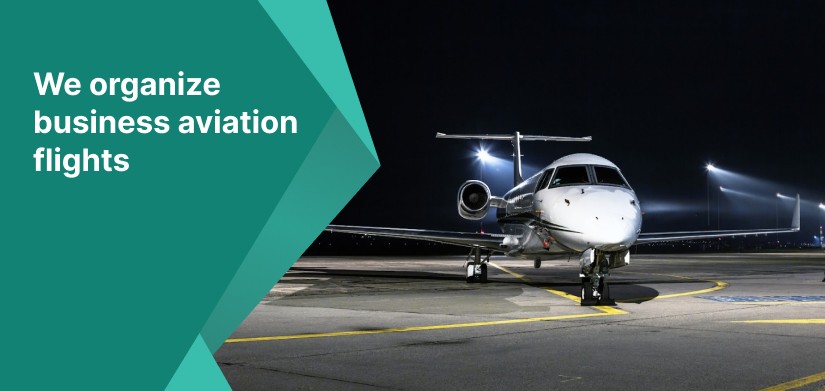
Who operates business aviation flights
A flight sold to passengers in Europe is commercial air transport. The operator must hold an Air Operator Certificate (AOC) issued by the civil aviation authority of its country and, within the EU, follow the EASA rules for commercial operations:
- approved maintenance;
- trained crews;
- an operations manual;
- insurance;
- regular audits by the authority.
The AOC lists every aircraft the operator is allowed to use. A company or a private owner flying its own jet works under the lighter rules for non-commercial flying. Such an aircraft may not be hired out to paying passengers unless it is managed by an operator and placed on that operator's AOC.
Jets in commercial service are normally flown by two pilots, and on larger aircraft a flight attendant joins the crew. Many operators also take part in voluntary safety audits such as IS-BAO, ARGUS or Wyvern; if your company requires one of them, mention it in the request. How a broker chooses and checks operators is described on the air broker page.
Fuel and emissions
Fuel supplied at EU airports must contain a minimum share of sustainable aviation fuel (SAF), and that share rises in steps. On request we give an estimate of the CO2 emissions of a flight for a company's travel report; where the operator offers it, an additional quantity of SAF can be bought, or the emissions can be offset.
How a business aviation flight is prepared
Between the request and take-off, the operator, the handling agents and our manager settle a list of tasks that passengers seldom see. These tasks also explain why a departure time or an airport sometimes has to change.
If the nearest suitable aircraft is based elsewhere, it first flies empty to your departure airport, and that leg is part of the price.
At coordinated airports each take-off and landing needs a slot, and some airports, mainly in the Alps and on the islands in summer, require prior permission (PPR) for every private flight. If the requested time is not available, we offer the nearest free one or a nearby airport.
An EU operator needs no traffic permit for flights within the EU. Many countries outside it require a landing permit, and some routes also need overflight permits, which take from a few hours to several working days depending on the country.
A handling agent is booked at both ends. At busy resort airports in high season parking may be limited to a few hours, so the aircraft drops the passengers and waits at another airport.
EU rules limit a crew's flight duty period to 13 hours at most, less after an early or night start and on days with several sectors, and require at least 10 hours of rest away from base and 12 at home base afterwards. A long day with a late return may therefore need a night stop or a second crew.
On international flights the operator or handler sends names and passport data to the border authorities before departure. The final list should reach us as early as possible, because late changes can delay the flight.
Before the flight you receive a summary with the times, the terminal address, the aircraft registration, the crew and the contacts for the day.
Aircraft used in business aviation
The class is chosen by the number of passengers, the luggage, the longest leg and the runways at both ends. Hourly rates start at the figures below; the one-way price of a trip also includes positioning, airport and handling fees. The bar shows the practical range.
Seated cabin; reaches short and mountain runways.
from EUR 2,000 per hourSeated cabin for short trips.
from EUR 2,500 per hourSeated cabin with a toilet.
from EUR 3,200 per hourTaller cabin and an enclosed washroom.
from EUR 4,500 per hourStand-up cabin with a flat floor.
from EUR 6,300 per hourGalley, flight attendant, seats that convert into beds.
from EUR 8,300 per hourAs heavy jets, with more range.
from EUR 9,800 per hourSeveral cabin zones, on some models a bedroom.
from EUR 12,000 per hourBedrooms, a conference area and a dining room.
from EUR 18,000 per hour
Range is a practical figure with passengers and baggage on board. Runway lengths are typical at full weight at sea level; heat, high altitude and a wet runway increase them. In the catalogue, super midsize jets are listed with midsize jets and long range jets with heavy jets.
Business jet manufacturers and models
Most business aircraft flying in Europe come from a handful of manufacturers:
- Bombardier: Learjet 75, Challenger 350 and 650, Global 6000, 7500 and 8000
- Textron Aviation: Cessna Citation M2, CJ3, CJ4, XLS+, Latitude and Longitude, Beechcraft King Air turboprops
- Embraer: Phenom 100 and 300, Praetor 500 and 600, Legacy 650, Lineage 1000
- Dassault: Falcon 2000LXS, 900LX, 6X, 7X and 8X
- Gulfstream: G280, G450, G550, G650 and G700
- Pilatus: PC-12 turboprop and PC-24 jet
- Honda Aircraft: HondaJet
- Daher: TBM single-engine turboprops
- Airbus and Boeing: ACJ and BBJ, airliners fitted out as VIP aircraft

What business aviation costs
Prices are for the whole aircraft, not per seat. A few one-way examples between business aviation airports, with the flight time of the light jet:
A return with the aircraft waiting is not simply twice the one-way price and is calculated on request. Many more routes and the cost of each class are on the Prices page, and with flexible dates an Empty Leg costs 30-60% less than a normal charter.
The calculator gives an indicative price for the whole aircraft on your route in the classes that suit it:
Services on the ground
One manager coordinates the parts of the trip that come before and after the flight:
- the car with a driver to the terminal and from the aircraft;
- catering from the operator's menu or from a restaurant you name;
- hotel bookings;
- the last leg by helicopter to a ski resort, an island or a yacht.
Contract and payment
Before you pay, you receive the contract with the operator's name, the aircraft, the times, the services included and the cancellation terms. Payment is by bank transfer or card, payment in cryptocurrency is possible, and other arrangements, including cash, can be discussed individually and depend on the situation; details are on the Payment page and in the Terms and Conditions.
Send us the route, the date and the number of passengers, and we will reply with offers from several operators, usually 4 to 7 options:
Questions about business aviation
-
- What is business aviation?
-
It is flying on business jets, turboprops and helicopters arranged around the passengers instead of an airline timetable. It includes on-demand charter by licensed operators, company flight departments and owners who fly their own aircraft. Most travellers use charter, where the whole aircraft is hired with its crew for one trip.
-
- Is business aviation the same as private or general aviation?
-
Private aviation is usually another name for it. General aviation, in the strict sense, means civil flying other than airline services and air transport for hire, from flying clubs to company aircraft. At airports, however, the general aviation terminal serves all private and charter flights.
-
- What is an FBO?
-
A fixed base operator: the company that runs the business aviation terminal at an airport. It receives passengers and crew, handles luggage, fuel, catering and parking, and arranges security and border checks in its own building.
-
- Which European airports handle the most business aviation?
-
Paris Le Bourget, Nice, Geneva, Farnborough and London Luton regularly lead by number of movements. Zurich, Milan Linate, Rome Ciampino and Vienna follow among the busiest.
-
- Who uses business aviation?
-
Companies of every size for meetings in several cities on one day, site visits and roadshows; families and groups of friends; sports teams; artists on tour. Many clients fly privately only a few times a year, when no airline connection fits the plan.
-
- Do I need to own an aircraft or buy a membership?
-
No. With on-demand charter you pay for each trip and nothing else. Jet cards, which are prepaid blocks of flight hours, and fractional ownership, a share in an aircraft, suit people who fly many hours every year.
-
- Can I hire a jet directly from its private owner?
-
Only if the aircraft is managed by an operator and listed on its Air Operator Certificate. A privately flown aircraft may not carry paying passengers, and such a flight may not be covered by insurance.
-
- Why can a late return need a night stop or a second crew?
-
EU rules cap a crew's duty day at 13 hours at most, less after an early start or on days with several flights. If an early departure and a late return do not fit into one duty period, the operator adds a second crew or plans a night stop.
-
- What is a slot, and can it change my departure time?
-
A slot is a take-off or landing time allocated at a busy airport. If the requested time is taken, the operator receives the nearest free one, a little earlier or later, or we suggest a nearby airport.
-
- Do flights outside the EU need special permits?
-
Many countries outside the EU require a landing permit for each charter flight, and some routes also need overflight permits. The operator applies for them; depending on the country this takes from a few hours to several working days, which matters for urgent departures.
-
- Are there security and passport checks on a private flight?
-
Yes. Passengers and luggage are screened, and flights leaving or entering the Schengen area pass border control, but everything happens inside the business aviation terminal and usually takes a few minutes.
The aviation expert will answer all your questions about business aviation and private flights. We will help you to compare and choose the best business jet for your flight.