

Private jet to Ecuador
Ecuador sits on the equator and packs the Andes, the Pacific coast, a share of the Amazon and the Galápagos Islands into one country. Private flights from Europe serve two kinds of trip: business in Quito, the capital, and Guayaquil, the largest city and the centre of industry, finance and the port; and the Galápagos, usually as a week on a boat with the long-range jet waiting on the mainland. The currency is the US dollar.
Quito is 8,200-10,400 km from the main European cities, and its airport lies at about 2,400 m. A long-range jet flies there without landing in 10-12 hours, while a heavy jet stops once for fuel. Every foreign aircraft needs a permit from DGAC, the civil aviation authority, and the islands have rules of their own: they have no airport of entry, and the listed procedures do not allow charter flights there by foreign aircraft. As a broker, we compare operators in Europe and North America and plan the mainland legs and the islands as one trip.
Say in the form whether the trip is for Quito, Guayaquil or the islands; the answer decides the airport and the permit.
Why fly privately to Ecuador

Flight times and crew
Global 7500 without a stop, block times from the tables below:
- Madrid - Quito: 10:12 h, London 10:41 h, Paris 10:53 h
- Geneva 11:09 h, Zurich 11:22 h, Milan 11:26 h, Hamburg 11:31 h
- Munich 11:39 h, Vienna 12:02 h to Quito
- Guayaquil: Madrid 10:31 h, London 10:59 h, Frankfurt 11:42 h
- Larnaca - Quito: 13:50 h, still without landing
- Lisbon - Quito: 9:39 h in a Gulfstream G650
A Gulfstream G550 is about 20 minutes slower on each route and also flies without a stop, except from Larnaca. The Challenger 650 stops once, for example in the Azores or Cape Verde, which makes the trip 12:17-14:13 h from the hubs and 16:07 h from Larnaca. Flights of this length reach the duty limits of a two-pilot crew, so the operator adds a third pilot or plans a rest before the aircraft flies on, and the extra crew member appears in the quote.
Prices for a private jet to Ecuador
The tables price the whole jet for a one-way flight, taking an aircraft based close to the departure airport. Permits, handling, any fuel stop charges, the third pilot and passenger taxes come on top. The flight time column belongs to the first aircraft in each row.
From the European hubs to Quito and Guayaquil
| Route | Distance | Flight time | Heavy jet Challenger 650 |
Long range Gulfstream G550 |
Ultra long range Global 7500 |
|---|---|---|---|---|---|
| London Farnborough - Quito | 9,159 km | 12:46 h, 1 stop | EUR 115,000 | EUR 135,000 | EUR 150,000 |
| Paris Le Bourget - Quito | 9,347 km | 13:00 h, 1 stop | EUR 115,000 | EUR 140,000 | EUR 150,000 |
| Geneva - Quito | 9,592 km | 13:17 h, 1 stop | EUR 120,000 | EUR 140,000 | EUR 155,000 |
| Zurich - Quito | 9,785 km | 13:31 h, 1 stop | EUR 120,000 | EUR 145,000 | EUR 160,000 |
| Milan Linate - Quito | 9,833 km | 13:34 h, 1 stop | EUR 120,000 | EUR 145,000 | EUR 160,000 |
| Munich - Quito | 10,028 km | 13:48 h, 1 stop | EUR 125,000 | EUR 150,000 | EUR 165,000 |
| Vienna - Quito | 10,383 km | 14:13 h, 1 stop | EUR 130,000 | EUR 155,000 | EUR 170,000 |
| Madrid - Quito | 8,736 km | 12:17 h, 1 stop | EUR 110,000 | EUR 130,000 | EUR 145,000 |
| Nice - Quito | 9,661 km | 13:22 h, 1 stop | EUR 120,000 | EUR 145,000 | EUR 155,000 |
| Hamburg - Quito | 9,909 km | 13:39 h, 1 stop | EUR 125,000 | EUR 145,000 | EUR 160,000 |
| Larnaca - Quito | 12,004 km | 16:07 h, 1 stop | EUR 145,000 | EUR 195,000 | EUR 195,000 |
| London Farnborough - Guayaquil | 9,441 km | 13:06 h, 1 stop | EUR 120,000 | EUR 140,000 | EUR 155,000 |
| Madrid - Guayaquil | 9,014 km | 12:36 h, 1 stop | EUR 115,000 | EUR 135,000 | EUR 145,000 |
| Paris Le Bourget - Guayaquil | 9,630 km | 13:20 h, 1 stop | EUR 120,000 | EUR 140,000 | EUR 155,000 |
| Frankfurt - Guayaquil | 10,080 km | 13:52 h, 1 stop | EUR 125,000 | EUR 150,000 | EUR 165,000 |
| Amsterdam - Guayaquil | 9,834 km | 13:34 h, 1 stop | EUR 120,000 | EUR 145,000 | EUR 160,000 |
The Challenger 650 with one stop costs EUR 110,000 from Madrid to Quito and EUR 115,000 from London; a non-stop Gulfstream G550 costs EUR 130,000 from Madrid and EUR 135,000 from London. Guayaquil is a little further from Europe: from London it costs EUR 120,000 with a stop. From Larnaca the Gulfstream G550 also has to stop, and at EUR 195,000 it costs the same as the non-stop Global 7500.
From other European cities
| Route | Distance | Flight time | Heavy jet Falcon 900EX |
Long range Falcon 8X |
Ultra long range Gulfstream G650 |
|---|---|---|---|---|---|
| Lisbon - Quito | 8,231 km | 11:41 h, 1 stop | EUR 120,000 | EUR 125,000 | EUR 130,000 |
| Lisbon - Guayaquil | 8,508 km | 12:01 h, 1 stop | EUR 125,000 | EUR 125,000 | EUR 130,000 |
| Barcelona - Quito | 9,219 km | 12:51 h, 1 stop | EUR 130,000 | EUR 135,000 | EUR 145,000 |
| Dublin - Quito | 8,845 km | 12:24 h, 1 stop | EUR 130,000 | EUR 130,000 | EUR 135,000 |
| Brussels - Quito | 9,517 km | 13:12 h, 1 stop | EUR 135,000 | EUR 140,000 | EUR 145,000 |
Lisbon is the closest start: a non-stop Falcon 8X costs EUR 125,000 to either city, and to Guayaquil it is the same price as a Falcon 900EX with a stop.
From the Americas
Ecuador enforces the ban on cabotage strictly: an aircraft that arrived from abroad may carry only the passengers it brought in and may not pick up anyone new inside the country, so domestic legs are flown by an aircraft based in Ecuador. International legs from the region are shown below, into the airport named last; the reverse costs the same:
| Route | Distance | Flight time | Light jet Citation CJ3 |
Midsize jet Citation Latitude |
Super midsize Challenger 350 |
|---|---|---|---|---|---|
| Miami - Quito | 2,902 km | 4:10 h | on request | EUR 27,000 | EUR 33,000 |
| Bogotá - Quito | 712 km | 1:29 h | EUR 10,000 | EUR 13,500 | EUR 15,500 |
| Lima - Guayaquil | 1,139 km | 2:05 h | EUR 12,000 | EUR 16,500 | EUR 19,000 |
| Panama City - Guayaquil | 1,250 km | 2:14 h | EUR 12,500 | EUR 17,000 | EUR 20,000 |
| Panama City - Manta | 1,123 km | 2:04 h | EUR 12,000 | EUR 16,500 | EUR 19,000 |
From Miami, about 2,900 km, a light jet is out of range and a Citation Latitude costs EUR 27,000 to Quito. Each of these flights is an international arrival with its own permit and border checks, and passengers going on to the USA need an ESTA or a visa.
Taxes in Europe depend on the departure country. France charges a per-passenger tax on business jets that rises with distance, so a flight to South America pays about EUR 2,100 rather than the roughly EUR 420 of a European one; Italy EUR 200 per passenger on flights from or to Italy, as all these routes exceed 1,500 km, and Austria EUR 12. From the UK, Air Passenger Duty is charged at the higher rate for jets of 20 t or more with fewer than 19 seats, and every type in the European tables falls into that group. German and Norwegian departure taxes are listed in the quote, the Netherlands charges per passenger on aircraft of 5.7 t or more, and Sweden charges nothing. Ecuadorian charges are listed in the quote.
Business jet price per flight hour








Three trips worked out
Price per passenger
The aircraft is chartered as a whole, so the cost per seat falls as more people travel; taxes are charged per passenger:
| Route | Aircraft | Whole aircraft | 4 passengers | 8 passengers | 12 passengers |
|---|---|---|---|---|---|
| Madrid - Quito | Challenger 650 | EUR 110,000 | EUR 27,500 | EUR 13,800 | EUR 9,200 |
| London Farnborough - Quito | Gulfstream G550 | EUR 135,000 | EUR 33,800 | EUR 16,900 | EUR 11,300 |
| Paris Le Bourget - Quito | Global 7500 | EUR 150,000 | EUR 37,500 | EUR 18,800 | EUR 12,500 |
| Vienna - Quito | Gulfstream G550 | EUR 155,000 | EUR 38,800 | EUR 19,400 | EUR 12,900 |

Calculator
The calculator returns a first estimate; mention Quito, Guayaquil or the islands in the comment.
Airports for private flights
Quito and Guayaquil handle business aviation at scale, both airports of entry open round the clock, with general aviation terminals run by handlers such as Ecuacentair and Jethandling. A handler's agent takes passengers through passport and customs control, and the airport police routinely inspect arriving aircraft, even on a technical stop.
| Airport | Codes | Runway | Elevation | Note |
|---|---|---|---|---|
| Quito | UIO / SEQM | about 4,100 m | about 2,400 m | 24 h, airport of entry |
| Guayaquil | GYE / SEGU | about 2,790 m | sea level | 24 h, handling compulsory |
| Manta | MEC / SEMT | about 2,860 m | sea level | Customs first at Quito or Guayaquil |
| Cuenca | CUE / SECU | about 1,900 m | about 2,530 m | Light and midsize jets |
| Galápagos Baltra | GPS / SEGS | about 2,400 m | near sea level | No fuel, not an airport of entry |
| Galápagos San Cristóbal | SCY / SEST | under 1,900 m | near sea level | No fuel, short and narrow |
DGAC permits depend on the plan. A technical landing or a stay of under 48 hours at one airport needs only advance notice; a longer stay at one airport about 48 hours' notice; a programme with several Ecuadorian airports takes longer, with processing times of 8-12 working days quoted, so with the islands or several airports we allow three weeks. A charter needs its own approval, and every change of date, aircraft or airport means an amendment.
The Galápagos: what is possible
The islands are why many clients ask about Ecuador. The archipelago counts 127 islands, islets and rocks, about 97.5 % of its land is national park, and every group goes ashore with a licensed guide. The rules for aircraft and visitors are strict:
In practice:
- No airport on the islands is an airport of entry: a jet from Europe clears customs and immigration at Quito or Guayaquil first.
- The listed procedures do not permit charter flights to the islands by foreign aircraft; a foreign aircraft may go only on a private, non-revenue flight, with limited passengers and no overnight parking, in a narrow daylight window with a slot to within 15 minutes.
- Before leaving the mainland the cabin is sprayed against insects, while passengers wait in a lounge; the Galápagos biosecurity agency checks all baggage, and fresh food and plants are controlled.
- There is no aviation fuel on the islands, so an aircraft carries enough for the return to the mainland, which can be impossible for a small jet with a full cabin.
- Visitors stay up to 60 days and need a transit control card bought at the departure airport, proof of a hotel or boat booking, a return flight to the mainland and health insurance; the national park entry fee is paid per person.
- The islands keep UTC-6, one hour behind the mainland.
Most guests therefore fly to Baltra or San Cristóbal on the scheduled service from Quito or Guayaquil, or with an Ecuadorian operator, and use the private jet for the crossing and the mainland. Boats often sail on the day of arrival, so the flight to the islands is planned around the boat, and a specific week in the warm season is best named at the first enquiry.

Which aircraft
| Class | Typical model | Seats | For Ecuador |
|---|---|---|---|
| Light jet | Citation CJ3 | 6-7 | Bogotá, Lima, Panama City; domestic legs with an Ecuadorian operator |
| Midsize jet | Citation Latitude | 8-9 | Miami without a stop |
| Heavy jet | Challenger 650, Falcon 900EX | 10-14 | One fuel stop from Europe at the lowest price |
| Long range | Gulfstream G550, Falcon 8X | 12-16 | Non-stop from every hub except Larnaca |
| Ultra long range | Global 7500, Gulfstream G650 | 13-17 | Non-stop from every hub, the largest reserve for the climb out of Quito |
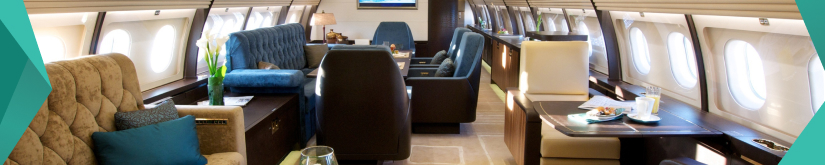
For a crossing of eleven hours or more, a cabin where the seats convert into beds matters, and ultra long range jets offer the most room. Landing at Guayaquil avoids the altitude limit on the way home; for business in the capital, Quito saves the drive, and the operator states before the quote whether the return needs a stop.
Want to compare Quito and Guayaquil, or a stop and non-stop, for your dates? Leave your number and a consultant will call back.
Seasons on the mainland and the islands
On the equator, altitude and ocean currents set the weather, not the European seasons. Quito is spring-like all year, the coast hot and humid. From December to May the water around the islands is warmer and the sea calmer, the main season for naturalist cruises; from June to November the cold Humboldt current brings cooler water, drizzle called garúa and more marine life. The busiest weeks are Christmas and New Year, July and August, and carnival. Empty Legs across the Atlantic are rare; a window of a few weeks gives the best chance.
From the airports
We book a car with a driver through the handler and avoid taxis hailed in the street. The authorities periodically declare a state of emergency in some provinces, with more police and military and sometimes a curfew, and government travel advice for some areas, mainly near the northern border, changes with it; we check the current advice before each flight.
Empty Legs between Europe and Ecuador
Few aircraft cross the Atlantic to Ecuador, so legs are rarer than on European routes. Send a window of a few weeks to empty-legs@jets.flights.
Taking a dog or cat
The animal flies in the cabin beside you once the operator agrees and stays on board at a fuel stop. For mainland Ecuador:
- A health certificate after a vet's examination a few days before departure, in the format set by Agrocalidad, the agriculture agency, and endorsed by the state veterinary service of the departure country. The version for departures from Great Britain is valid 10 days from signature and asks for a rabies vaccination at least 21 days before export and an attached antibody result of at least 0.5 IU/ml; we confirm the current form for each departure country.
- Microchip, valid rabies vaccination and the other vaccinations entered on the certificate.
- Internal and external parasite treatment shortly before travel, with product, active ingredient and date.
- Agrocalidad checks the papers on arrival on the mainland. The Galápagos have their own, much stricter biosecurity rules, so a pet stays on the mainland with someone to look after it.
Entry, customs and documents
Before departure
- Passports valid six months from arrival for every passenger.
- Names and passport numbers for the DGAC permit, three weeks ahead for the islands or several airports.
- Online customs registration for cash or taxable goods.
- For the Galápagos: boat or hotel booking, health insurance and the return to the mainland.
- For a pet: the Agrocalidad certificate and the antibody result for the return.
How to book
- Tell us whether the trip is for Quito, Guayaquil or the Galápagos, the dates and the number of passengers.
- We compare a one-stop heavy jet with a non-stop long-range jet, and the operator says whether the return from Quito needs a stop.
- After the contract and payment, the operator applies for the DGAC permit; we book handling, the Ecuadorian operator or scheduled seats for the islands and any domestic leg.
- Passport data go to the handler, and the third pilot or the crew's rest is planned.
- On landing the handler takes you through the checks, and the car is waiting.
Frequently asked questions about Ecuador by private jet
-
- How much does a private jet from Europe to Ecuador cost?
-
From EUR 110,000 one way from Madrid to Quito in a Challenger 650 with one stop, for the whole aircraft; a non-stop Gulfstream G550 costs EUR 135,000 from London.
-
- Can a private jet fly us to the Galápagos?
-
Not straight from Europe. The islands have no airport of entry, and the listed procedures allow no charter flights there by foreign aircraft. Most guests clear in Quito or Guayaquil and fly on with a scheduled flight or an Ecuadorian operator.
-
- Quito or Guayaquil?
-
Quito for the capital, the old town and the volcanoes; Guayaquil for the coast, the port and the shortest connection to the islands. Guayaquil is at sea level, so the flight home has no altitude limit.
-
- Does Quito's altitude matter?
-
At about 2,400 m the take-off run is longer and the weight lower, so the operator calculates in advance whether the return to Europe needs a stop.
-
- How long is the flight?
-
About 10:41 h non-stop from London to Quito in a Global 7500 and 10:12 h from Madrid; with a fuel stop in a Challenger 650 about 12:46 h from London.
-
- How far ahead must we book?
-
For one airport a few days can be enough; for several Ecuadorian airports or the islands allow three weeks for the DGAC permit.
-
- Do we need a visa?
-
No, EU and UK citizens stay up to 90 days in any 12 months, with a passport valid six months from arrival. The Galápagos add their own transit card and insurance.
-
- Can our dog come along?
-
To the mainland, yes, in the cabin with an Agrocalidad certificate, microchip, rabies vaccination and parasite treatment. Not to the Galápagos, which have stricter biosecurity rules.
-
- What is the time difference?
-
Mainland Ecuador keeps UTC-5: 5 hours behind London in winter and 6 in summer. The Galápagos are one hour further behind.
-
- Can the jet fly us from Quito to Guayaquil?
-
Not with new passengers: cabotage is enforced strictly, so domestic legs go to an Ecuadorian operator. The jet can land at one city and leave from the other with the same party, with the permit covering both.
-
- Are there Empty Legs to Ecuador?
-
Occasionally, mostly from Florida and Panama and after the holiday seasons. Across the Atlantic they are rare; write to empty-legs@jets.flights.
The aviation expert will answer all your questions about business aviation and private flights. We will help you to compare and choose the best business jet for your flight.