
Cirrus SR22
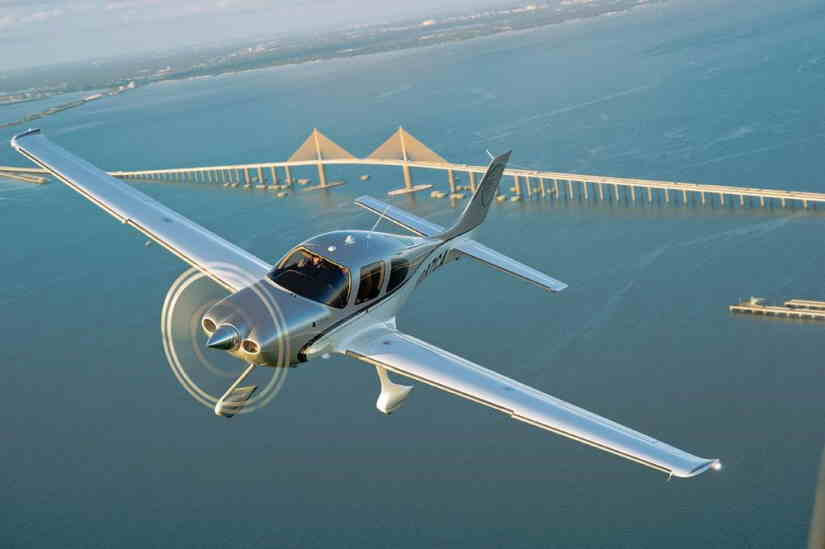
The Cirrus SR22 is a single-engine piston aircraft with a composite airframe. It carries a pilot and three passengers, or four with the extra rear seat. Every SR22 has CAPS as standard, a parachute that lowers the whole aircraft to the ground in an emergency. Cirrus still builds the type, but most examples belong to private owners, flying clubs and schools, and only a handful of European operators fly it for paying passengers.

Cabin the size of a large car
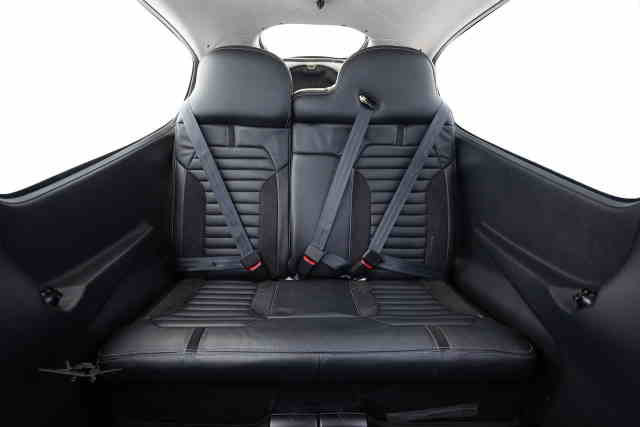
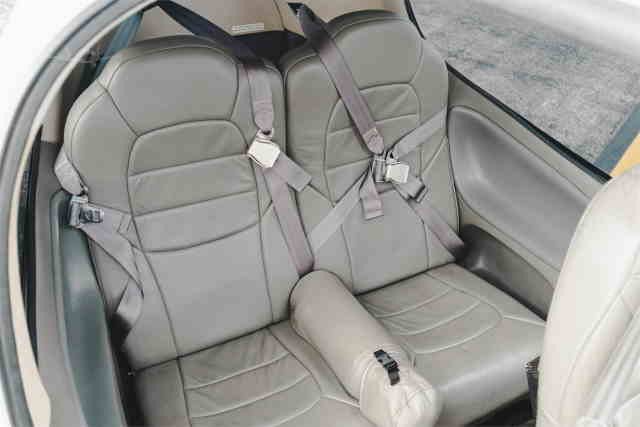
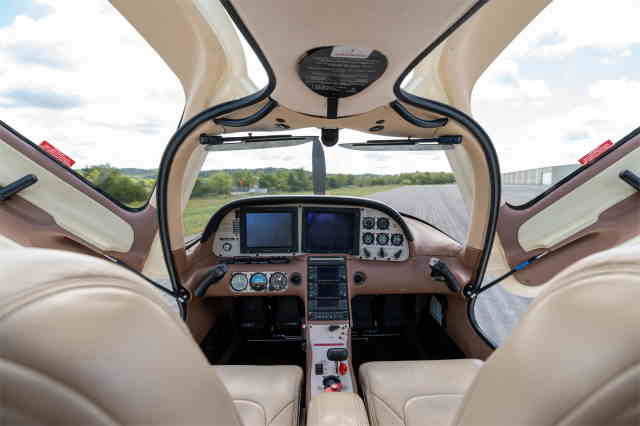
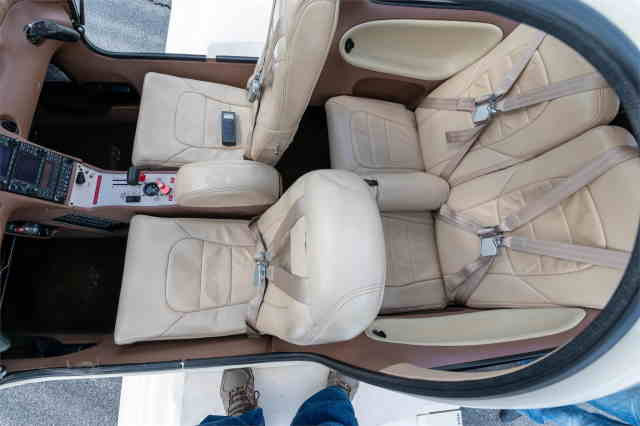
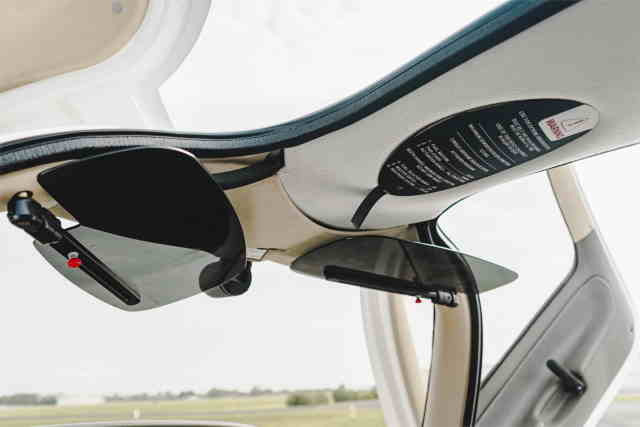
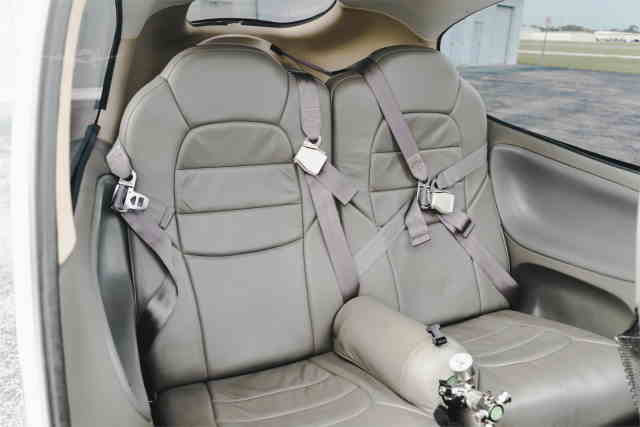
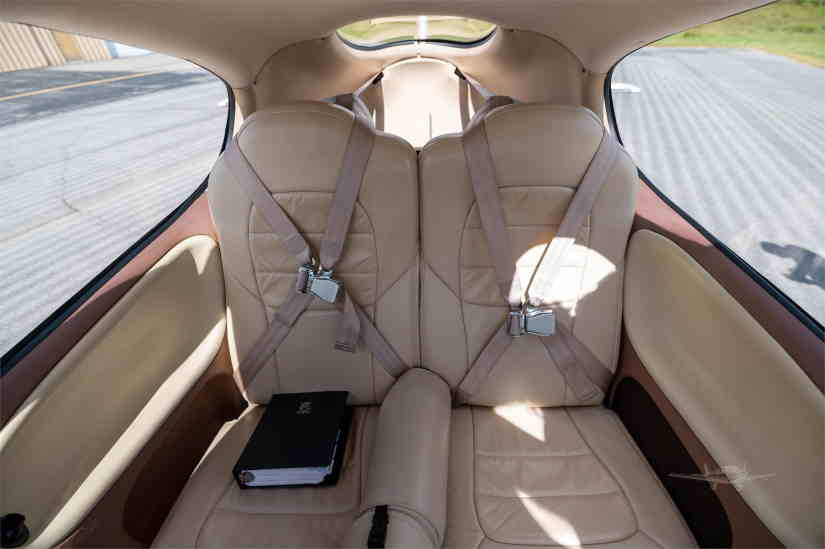
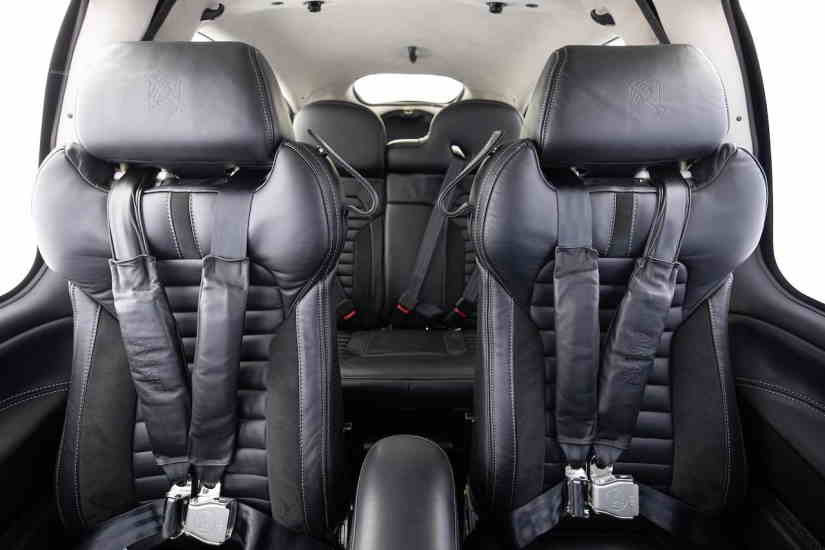
Cirrus gives the cabin as 1.27 m high and 1.24 m wide, with about 2.44 m of usable length. The pilot and one passenger sit in front, two or three people share the rear bench, and everyone climbs in over the wing through a door on each side. Seated it is comfortable, but nobody can stand up.
- Unpressurised: the normally aspirated SR22 is cleared to 5,334 m, the turbocharged SR22T to 7,620 m, and above about 3,000 m passengers need oxygen, standard in the SR22T and optional in the SR22
- Engine noise fills the cabin, so each seat usually has a headset with intercom
- No toilet, no galley and no cabin crew
- Wi-Fi depends on the aircraft and is rarely fitted
| Cabin | |
|---|---|
| Cabin height | 1.27 m |
| Cabin width | 1.24 m |
| Cabin length | about 2.44 m |
| Seats | pilot plus 3, or plus 4 with the extra rear seat |
| Pressurisation | none |
| Toilet | none |
| Whole-aircraft parachute | standard (CAPS) |
| Wi-Fi | depends on the aircraft, usually not fitted |
Baggage and weight
The baggage area is loaded through a small door on the side of the fuselage. Soft bags and small cabin cases fit; large hard suitcases do not. With fuel for three hours and a 45-minute reserve, Cirrus leaves 439 kg for everyone on board, which in practice means the pilot, three adults and light bags, or two passengers with larger holdalls.
- Skis fit in aircraft with a split rear bench, where one folded section takes a passenger's place
- Golf bags: one or two at most, and only with fewer people on board
- Give the weight of each bag in the request, since the pilot has to include it in the load sheet
Engine, parachute and short runways
The SR22T flies higher and faster but gives up some range: 1,891 km at 55 % power against 2,165 km. Which version you get depends on the operator, so we state it in the offer. The short runs open small regional airfields, as long as AVGAS is available and passengers can be handled. On paper they also suit the 1,071 m runway of Saint-Tropez La Môle and Samedan at about 1,700 m elevation, but both need settled weather and the operator confirms access for the type.
One piston engine under EU rules
EU rules let a single-engine aircraft carry commercial passengers at night or in cloud only under a SET-IMC approval, which exists for turbine engines alone. A piston SR22 therefore flies paying passengers in daylight and good visibility, on a route with terrain suitable for a forced landing.
- Long sea crossings are out: Nice - Corsica, Larnaca - Rhodes or flights to the Balearics need a twin or a turboprop
- A low cloud base or winter haze means a new date, and in winter darkness ends the flying day early, so plan around midday and give us a back-up day
- Domestic legs inside one EU country need an EU operator, and London - Manchester needs a UK operator
Routes from European hubs
Thirty-one one-way legs from twelve hubs, all overland or with only a short water crossing. Prices are for the whole aircraft with pilot and fuel, without airport fees and passenger taxes. At the larger hubs the operator may suggest a nearby airfield that handles light aircraft more cheaply.
Up to two hours: where this aircraft belongs
| Route | Distance | Flight time | Price for the whole aircraft |
|---|---|---|---|
| Zurich - Sion (SIR) | 166 km | 1:03 h | EUR 4,000 |
| Frankfurt - Luxembourg (LUX) | 174 km | 1:05 h | EUR 4,000 |
| Amsterdam - Brussels (BRU) | 158 km | 1:02 h | EUR 4,000 |
| Milan Linate - Bologna (BLQ) | 188 km | 1:08 h | EUR 4,000 |
| Vienna - Budapest (BUD) | 215 km | 1:13 h | EUR 4,000 |
| Geneva - Zurich (ZRH) | 230 km | 1:16 h | EUR 4,000 |
| Milan Linate - Venice (VCE) | 240 km | 1:18 h | EUR 4,000 |
| Munich - Samedan (SMV) | 248 km | 1:20 h | EUR 4,000 |
| London Farnborough - Manchester (MAN) | 252 km | 1:20 h | EUR 4,000 |
| Nice - Milan (LIN) | 257 km | 1:21 h | EUR 4,000 |
| Nice - Pisa (PSA) | 256 km | 1:21 h | EUR 4,000 |
| Paris Le Bourget - Brussels (BRU) | 261 km | 1:22 h | EUR 4,000 |
| Zurich - Munich (MUC) | 261 km | 1:22 h | EUR 4,000 |
| Munich - Prague (PRG) | 265 km | 1:23 h | EUR 4,000 |
| Vienna - Salzburg (SZG) | 268 km | 1:24 h | EUR 4,500 |
| Hamburg - Berlin (BER) | 274 km | 1:25 h | EUR 4,500 |
| Hamburg - Copenhagen (CPH) | 280 km | 1:26 h | EUR 4,500 |
| Milan Linate - Cannes (CEQ) | 280 km | 1:26 h | EUR 4,500 |
| Zurich - Frankfurt (FRA) | 286 km | 1:27 h | EUR 4,500 |
| Madrid - Valencia (VLC) | 286 km | 1:27 h | EUR 4,500 |
| Nice - Florence (FLR) | 321 km | 1:34 h | EUR 4,500 |
| Geneva - Saint-Tropez (LTT) | 339 km | 1:38 h | EUR 4,500 |
| London Farnborough - Paris (LBG) | 344 km | 1:39 h | EUR 4,500 |
| Munich - Vienna (VIE) | 355 km | 1:41 h | EUR 4,500 |
| London Farnborough - Brussels (BRU) | 370 km | 1:44 h | EUR 4,500 |
| Amsterdam - Hamburg (HAM) | 379 km | 1:46 h | EUR 4,500 |
| Madrid - Seville (SVQ) | 396 km | 1:49 h | EUR 4,500 |
| Paris Le Bourget - Geneva (GVA) | 409 km | 1:52 h | EUR 4,500 |
| Frankfurt - Berlin (BER) | 431 km | 1:56 h | EUR 4,500 |
Two to four hours: possible, but long without a toilet
| Route | Distance | Flight time | Price for the whole aircraft |
|---|---|---|---|
| Hamburg - Munich (MUC) | 600 km | 2:30 h | EUR 5,500 |
| Paris Le Bourget - Nice (NCE) | 694 km | 2:49 h | EUR 5,500 |
- Legs around one hour, such as Milan - Bologna or Vienna - Budapest, suit the aircraft best and leave room for a same-day return.
- Hamburg - Munich (2:30 h) and Paris - Nice (2:49 h) are within range on paper, yet they need good weather along the whole route and a patient group.
- Larnaca is missing because every leg from Cyprus crosses open sea. There, and for Corsica, Sardinia or the islands, we offer a twin such as the Beechcraft Baron 58 or a turboprop.
The calculator gives an indicative price for the SR22 and other small aircraft on your own route, including from regional airfields.
What a Cirrus SR22 charter costs
The rate starts at EUR 900 per flight hour for the aircraft with pilot and fuel. A short leg still costs well above rate x flight time: Zurich - Sion takes 1:03 h and starts at EUR 4,000, because the operator adds a minimum charge, positioning from the aircraft's base and the pilot's working day.
Over longer legs this fixed part weighs less. Geneva - Saint-Tropez (1:38 h) starts at EUR 4,500, Paris Le Bourget - Geneva (1:52 h) also at EUR 4,500 and Hamburg - Munich (2:30 h) at EUR 5,500. The price stays the same for one passenger or four.
You pay for the whole aircraft; split between passengers, Geneva - Saint-Tropez comes to:
How to fly for less
Empty Legs on this type
Empty Legs on this exact type are rare, since so few aircraft fly commercially in Europe. If any small aircraft will do, repositioning legs of piston twins or turboprops between Switzerland, northern Italy, southern Germany and the Riviera turn up more often, at 30-60% below a normal charter as examples. Date and route are fixed, and the leg can be cancelled if the aircraft gets a full booking.
Send your route and a date window to empty-legs@jets.flights or check the Empty Legs page.
SR22 compared with other small aircraft
- Lowest hourly rate for two or three people
- Parachute for the whole aircraft as standard
- Short runways and small regional airfields
- Daylight and good visibility only in commercial flights
- No pressurisation and no toilet
- Little baggage; weight limits the number of people
For the same trip clients usually compare a faster piston, a twin and a pressurised turboprop.
What we need for a quote
- Route and date, ideally with a back-up date
- Number of people with their approximate weight, and the weight of the bags
- Whether the trip can move if the weather does not allow a daytime flight in good visibility
We check every operator's AOC before quoting. If no SR22 is free near you, we send offers for another small aircraft; each case depends on the operator's availability and contract.
Questions about the Cirrus SR22
-
- How much does an SR22 cost from Geneva to Saint-Tropez?
-
From EUR 4,500 for the whole aircraft one way according to the table, with a flight time of 1:38 h. Airport fees, handling and any passenger taxes are added in the quote.
-
- What does the price include?
-
The aircraft, the pilot and fuel. Positioning from the base, airport and handling fees, passenger taxes, de-icing and the pilot's hotel on a later return come on top.
-
- How can I fly an SR22 more cheaply?
-
Return on the same day, keep the date flexible, use a regional airfield and let us also quote a twin or turboprop based closer to you.
-
- Are there Empty Legs on the SR22?
-
Rarely, as few aircraft fly commercially. Accepting any small aircraft on your route raises the chance, with discounts of 30-60% as examples.
-
- Can the SR22 fly at night or in cloud?
-
Not with paying passengers. EU rules allow it for single-engine aircraft only with a SET-IMC approval, which is limited to turbine engines. Flights take place in daylight and good visibility.
-
- How many people can fly?
-
The pilot plus three or four passengers, depending on the aircraft. With fuel for three hours there are 439 kg for people and bags including the pilot, so two or three people with light bags is the realistic load.
-
- Is there a toilet on board?
-
No. Legs of up to about two hours are comfortable; for longer trips the operator can plan a short stop.
-
- Can we take a dog?
-
A small dog usually yes, in a carrier or on a lap once the operator agrees; a large dog takes a passenger seat. Within the EU it needs a microchip, a rabies vaccination and an EU pet passport.
The aviation expert will answer all your questions about business aviation and private flights. We will help you to compare and choose the best business jet for your flight.